Weekly Health Update

weekly health update FILED UNDER Blog

“To insure good health: eat lightly, breathe deeply, live moderately, cultivate cheerfulness, and maintain an interest in life.”
~William Londen


Health Alert: Marijuana Less Addictive Than Cigarettes, But Still Addictive

One of the few epidemiological studies of marijuana was released over the weekend, having gained importance with Washington and Colorado having recently legalized the sale of pot. The study proved that alcohol, cigarettes, and other forms of tobacco/nicotine are all more addictive than marijuana — but not by much. Approximately 2 million Americans are addicted to marijuana in the sense that they cannot quit and their lives are negatively affected by the drug.

Diet: Reduce Food Cravings with Well-Timed Video Games

A group of scientists at Plymouth University, testing the theory that food cravings came from our imagination, not our stomachs — and were thus visual, not something felt, tested their theory in a unique way. They proved that people feeling food cravings who stopped whatever they were doing and played 3 minutes of a highly visual video game (they used Tetris) felt a 25% drop in their cravings.

Exercise: Antioxidants Nullify Many Benefits of Exercise

We’ve all been told that antioxidants are massively good for you — but studies from as far back as 2009 (Germany) and as recently as last week (Norway) have proven again and again that that combining high-antioxidant foods with exercise can make the exercise much less effective. One of the major benefits of exercise is the creation of new mitochondria (the organelles that burn fat and sugar for calories) inside your cells — but that cannot happen in the presence of “healthy” levels of antioxidants. In particular, Vitamin C, resveratrol, and CoQ10 have shown to impair the benefits of exercise.

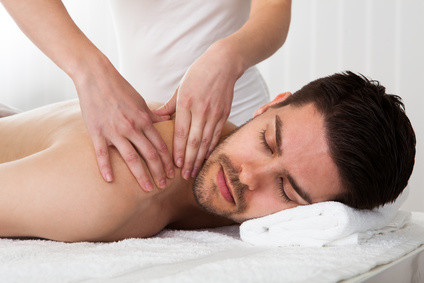
Neuromuscular Massage: The Newest Back & Neck Pain Relief Breakthrough Taking Off in the United States

A study released by the American Massage Therapy Association revealed that neuromuscular massage therapists are becoming more and more in demand in the United States as the benefits of therapeutic massage become more evident. Predictions are that there will be 20% more massage therapists by 2020 than there are today — significantly above the average rate of growth for medical professionals.

Preventative Medicine: The Trifecta of Dietary Preventatives

It’s not that often that we get great, ‘clean’ studies out of China, but it can happen. In this case, a month or so ago, a trio of scientists at Wuhan University called out three preventative superfoods: garlic (for it’s antibacterial, antiviral, and antiparasitical properties), ginger (as a powerful anti-inflammatory and digestive aid), and lemon (because it cleanses the blood and liver as well as reducing mucus body-wide.)  A tablespoon each of the first two — raw, with honey — and a glass of water with a lemon squeezed into it — are on their list of things everyone should consider as a daily part of their health regimen.

Mental Health: Stress Causes the Brain to Build Misfires Into Itself

There are stem cells in the brain that are used when new neurons need to be built. But according to researchers at UC Berkley, under chronic stress, the brain will instead convert these stem cells into a kind of glial cell that has the job of coating nearby neurons in a myelin sheath. This operation is necessary in some parts of the brain (‘white matter’), but when it happens in an area of the brain that is normally gray matter, it can cause communications between some cells to become accelerated while others’ communications are at normal speed. The result is a ‘misfire’ that can cause a variety of effects from PSTD-like symptoms to a lack of ability to consider the ramifications of one’s actions. End result? Avoid stress when at all possible.


What Is Whiplash?

FILED UNDER Car Accident

Whiplash is a specific kind of traumatic injury that harms the muscles and joints of the neck; while it can break a bone, such a fracture is a rare event. The tissues most injured in a whiplash collision are the neck muscles and joints of the neck: the places where bone meets bone.

Muscles cross over the joints, contracting in order to move the bones in relationship to each other. Much like a ligament, if a muscle is overextended because the joint is forced to move beyond a muscle’s full extension, the muscle becomes injured.  An injured muscle is called a ‘strain.’  It’s quite normal for a single injury to cause both a sprain and a strain in the ligament and muscle respectively.

Quite often, “landmine knots” called trigger points form in the front and back neck muscles, causing severe aches and pains, as well as referred pain into the eyes and head.

Joints are held together with connective tissues called ligaments. Ligaments hold the bones together, limiting the movement of each joint. When the joint is forced to move beyond the limits that the ligaments set, the ligaments are injured, resulting in a sprain. You may recognize this from the term ‘sprained ankle.’

Unlike most joints, wherein a muscle stretches across a single joint because it has only a single pair of bones within its range, the spine is a complex collection of small bones and muscles that stretch over many of the joints between those small bones.

Although whiplash injury can break (fracture) a bone, fractures from whiplash trauma are quite rare.

Notice, for example, that your elbow only moves in one direction. The neck, meanwhile, can turn left and right, tilt up and down, slide forwards and backwards, slide side to side, and even extend and contract a little bit. It’s the most flexible part of the body. The neck also holds up the dead weight that is the massive human skull and the brain it contains. All that, and the neck muscles and bones also protect the spinal cord that connects our brain to the rest of our body, allowing us to feel sensations and move.

This is all due to the incredibly powerful and well-engineered bones in our spine, called vertebrae. Each vertebrae has three individual joints rather than the one that most bones are allowed. The largest joint on each vertebrae is called the disc joint, because a disc of ligament-like tissue sits between it and the next vertebrae in the spine. The disc joints are the ‘shock absorbers’ of our bodies.

Then, each vertebrae has two joints at the back of the bone, called facet joints. The facet joints are where the muscles that control the movement of your neck and back are connected.

When you get whiplash, the muscles, disc and facet joints between your neck vertebrae get overextended in a forward-back direction. This results in several related conditions: ligament sprains, muscle strains, and in extreme cases, the discs between vertebrae can rupture or become herniated.

Pain and Whiplash

FILED UNDER Car Accident

Whiplash injury research is both extensive and in-depth. Because whiplash is such a common legal battleground, there have been literally thousands of scientific and medical studies on every single aspect of whiplash.

For example, we’ve known for a couple of decades now that the primary sources of damage during a whiplash event is the overextension (‘inertial injury’) to the soft tissues (muscles, ligaments, fascia, and muscles) of the surrounding area and joints in your vertebrae.

By injecting the muscles and soft tissues of the neck with very localized anesthesia – thus numbing the neck one small section of tissue at a time – researchers studying whiplash have been able to determine precisely which muscles and tissues the pain is originating in. By using a powerful x-ray machine called a fluoroscope to precisely position anesthetic needles in the exact tissues they want to anesthetize, they can ensure that they don’t accidentally anesthetize the wrong tissues. When they make an injection that stops the patient’s pain, they’ve found the tissue that was responsible for the pain. By slowly working their way through the facet joints, the disc joints, the spinal muscles, the spinal nerves, the connective tissues, and other parts of the neck, they can establish in each case where the problem is.

The results have been very consistent across hundreds of patients: chronic whiplash pain is by far most commonly sourced in the muscles, trigger points, and  ligaments of the facet joints at the base of the neck, and secondly in the disc joints of the same vertebrae.

Whiplash-related headaches, however, come from “landmine knots” better known as trigger points in your neck and shoulder muscles. These trigger points refer pain directly into your head, behind your eyes, and base of skull causing you that aching tension throughout the day.  Whiplash-related headaches also come from ligaments of the facet joints in the upper part of the neck.

Whiplash Injury Healing Time

Injured muscles and soft tissues can take up to 12 months to heal completely even when given the most appropriate treatment. The average healing time for a well-treated whiplash injury (back to maximum movement with no pain) is seven months and one week – however, a meaningful amount of whiplash patients can take as long as two years to reach that point.

However, Neuromuscular Massage Therapy  is shown to greatly speed up recovery and pain relief, breaking the pain spasm cycle caused by the accident.

No Connection Between Whiplash and Vehicle Damage

FILED UNDER Car Accident

Numerous scientific and medical studies prove that the extent of damage to your vehicle is not a predictor of the extent of damage to your neck caused by a whiplash injury. In short, there’s no connection: you can find severe whiplash in the rider of a vehicle that suffered only a paint scratch, and you find a person with no whiplash damage who’s car has been totaled.

  • Specifically, no correlation is found between vehicle damage and:
  • The degree of whiplash injury
  • The duration of treatment required for whiplash injury
  • The severity of the symptoms of whiplash injury
  • The probability of chronic pain caused by whiplash injury
  • Or the probability of whiplash-related arthritis in the joints of the neck developing later.

Some vehicles are designed to collapse during an accident; others are made to resist collapse. All necks are designed with more or less the same standards of movement – so there’s a solid, engineering-based reason why no amount of correlation is found between vehicle damage and whiplash damage.

Why Inertia Is The Killer for Whiplash

FILED UNDER Car Accident

One of the most brilliant scientists that ever lived was undoubtedly Sir Isaac Newton – a physicist, astronomer, mathematician, theologian, and natural philosopher whose work has influenced many parts of our society. At age 43 – in 1647 – he published Principia Mathematica, which altered the history of science.

In his seminal book, Newton discusses three Laws of Motion – Laws which we’re able to easily use to explain the causes and effects of whiplash trauma and the injuries it causes. The First Law of Motion is the Law of Inertia. It says, quite simply, that an object that isn’t moving will remain motionless and that an object that is moving will keep moving in the same direction and speed – in both cases, unless some outside power intervenes to change things.

The larger and heavier and faster-moving an object, the greater the intervening power has to be in order to alter the motion. In the case of whiplash injuries, the object that’s moving is your head – a pretty hefty ball of mostly water, often moving forward at several dozen miles per hour while the vehicle (and, because of seat belts, the body) holding it up stop quite violently. The only force that can stop the head is the strength of the neck’s muscles and connective tissues.

Alternately, in the case of a rear-end collision, your car and body, which is held up by the seat back, lurches forward. Your neck flexes backward as your head doesn’t keep up. Then, because your car is heavy and holding your body in place with a seat belt, your car and body stops, but your head won’t. Your head plummets forward, again only stopped by your neck’s muscles and ligaments.

In either case, what happens is that, given a significant enough impact, the muscles and connective tissues of the neck tear and disjoin, causing severe damage we call ‘whiplash.’

Benefits Of Therapeutic Massage Therapy

FILED UNDER Car Accident

For nearly a century, we’ve known that the best way to get injured muscle tissues to heal is to get them to move – early and often, though not necessarily to the extremes of their normal limits. In particular, treating whiplash injuries has been easiest when combining massage, mobilization and manipulation of the tissues. When the joints are mobilized, the muscles and connective tissues move – and if done by someone trained in therapeutic massage rehabilitation, they can be moved in a way that encourages them to heal correctly.

The classic response to an injury has long been traction – the immobilization of the area. However, we’ve known for decades that the best whiplash healing happens with controlled movement, not immobilization.

When we hurt our neck’s muscles and ligaments, one of the most common responses is ‘guarding posture’ – a change in the way we hold our head and move that keeps the pain from flaring up. The problem is that when the guarding posture is held for weeks (or months or years) at a time, it can cause a snowball of changes to the way we hold our torso, walk, carry things, and so on – changes that themselves cause pain and problems.

The best way to avoid being permanently stuck in guarding posture is to allow our neck’s muscles and ligaments to heal – which means moving them correctly. But moving them correctly is what we’re guarding against! It hurts!  That’s precisely why you need a skilled neuromuscular massage  therapist to loosen up the muscles and help you move them correctly without causing wincing pain.

According to the Annals of Internal Medicine, the benefits of massage therapy for neck pain treatment and whiplash have proven to be significantly superior to self-guided exercises and drugs (the so-called “conservative treatment” espoused by most primary care physicians.)

When treating chronic whiplash pain, science proves the benefits of massage therapy to be more effective than acupuncture, non-steroidal anti-inflammatory drugs, and traction. In addition, the group treated with massage therapy had no adverse reactions – the group taking drugs actually reported more adverse reactions than benefits. Massage therapy was the only one of the three groups that was still found to have benefited one year later.

Best Deep Tissue Massage Therapist in Los Angeles

Massage Revolution - Trigger Point Therapy For The Neck and Back FILED UNDER Blog

3 Tips to Find the Best Deep Tissue Massage Therapist in Los Angeles

To find the best deep tissue therapist in Los Angeles, invest a bit in learning more about the industry. If you’ve ever been to a spa and received a massage that is anything but enjoyable, you know how frustrating it is to hand over any payment. You don’t feel relaxed and you may not want to come back. When you have so much on the line, including limited time, you want the very best results for your body. That’s why it is important to know where to find the best deep tissue massage therapist in Los Angeles.

#1 – Your Massage Center Specializes in Deep Tissue Massages

The fact is, not all massages are equal. While many companies provide a full list of massage services that are available, very few of them actually have a true, authentic deep tissue. This is one of the reasons you suffer when you go to an inferior facility. To overcome this problem, invest in a location that specifically specializes in deep tissue massages. Ask questions, not just about what they offer, but also about their training in this particular area. It gives you the confidence to enjoy your massage experience or to run the other way.

#2 – How Much Experience Does Your Massage Therapist Have?

You would not hire a doctor or any other professional without knowing they have experience. You don’t want to do that with your deep tissue massage either. Choose a massage therapist that has at least five years of experience. Anything less than this means that the individual hasn’t had time to hone skills and really learn how to provide a true massage of quality. The best deep tissue massage therapist in Los Angeles is one with years of experience, not something that is just fresh out of school without any real world knowledge.

#3 – Your Massage Therapist Knows Neuromuscular Massage

A key way to ensure you are going to the very best location in the region is to ask questions. In particular, ask if the massage therapist has neuromuscular massage experience. You may feel as though you are asking too many questions, but this is a key question to ask when you are looking for the best deep tissue massage therapist in Los Angeles. This is the most skilled, advanced form of deep tissue massage. Those that specialize in this type of massage are likely to be the best in the business. It is not easy, it is not fast, but it is one of the best ways to fully improve a person’s condition.

As you compare the options in the area, know that these three things help the best deep tissue massage therapist in Los Angeles to stand out from the rest. It is worth investing in these services, too. You see marked improvement in your pain and stress while leaving your appointment with a smile on your face every time. It is easy to really enjoy your experience with the right professional.

At Massage Revolution in Manhattan Beach, we guarantee you get the best deep tissue massage therapist in Los Angeles!  We specialize in deep tissue and neuromuscular massage,  and most of our therapists have at least 5 years experience.